
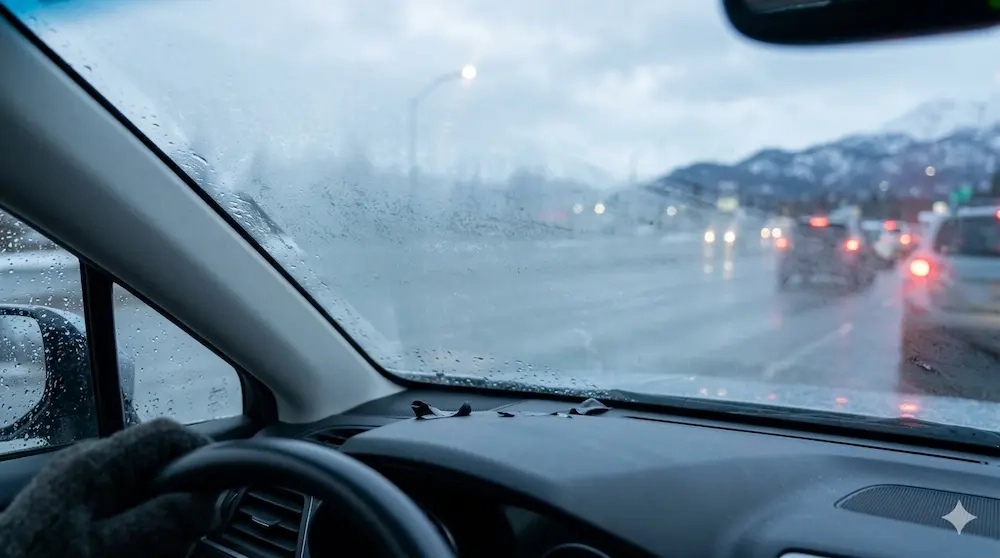
If your new windshield is fogging up worse than your old one ever did, you are not imagining it, and you are not the only Anchorage driver this has happened to. There is almost always a clear, fixable reason behind it, and most of the time it has nothing to do with the quality of the glass itself.
The short version: fresh windshields fog up more right after installation because of new adhesive curing, a tighter cabin seal, leftover humidity from the installation process, or in less common cases, a seal that was not finished properly. Some of this resolves on its own within a couple of weeks. Some of it needs a follow up visit. Here is how to tell which situation you are in.
What Fog Actually Is, Quickly
Fog on the inside of your windshield is condensation. Warm, moist air inside your cabin hits glass that is colder than the air, and the moisture in that air turns into tiny droplets on the surface. This is basic physics, the same reason a cold drink sweats on a humid day. Your windshield is simply the largest, most exposed piece of glass in the vehicle, so it is where you notice it first.
This part is not unique to a new windshield. Every windshield fogs under the right combination of temperature and humidity. What changes after a replacement is how often those conditions get triggered, and that is where the real explanation lives.
Reason One: The Adhesive Is Still Curing
Your new windshield was not snapped into place. It was bonded to the vehicle frame using a structural urethane adhesive, and that adhesive cures through a chemical reaction that actually depends on moisture in the air to complete properly. During the first one to two weeks after installation, it is normal for that adhesive to release small amounts of moisture into the cabin as part of the curing process.
This shows up as fogging that is a bit more frequent or a bit slower to clear than what you are used to. It is not a defect. It is a known, temporary side effect of how the bonding chemistry works, and it should taper off as the adhesive finishes curing.
Reason Two: Your New Seal Is Doing Its Job Too Well
Here is something most people do not expect. A brand new windshield seal is often tighter than the one it replaced, especially if your old glass had been in place for several years and the seal had started to wear or loosen slightly over time.
A tighter seal is a good thing structurally. It also means less air exchange between the cabin and the outside, which means humidity from your breath, wet boots, or melting snow on your jacket has fewer ways to escape on its own. The moisture that used to slowly leak out through a slightly worn seal now stays inside longer, and it ends up on your glass instead.
Reason Three: Installation Day Humidity
If your windshield was installed on a day with rain, snow, or just generally damp Anchorage weather, some of that ambient humidity was present in the cabin during the install itself. It takes a little time for a vehicle’s interior to fully return to its normal humidity baseline after the doors and old glass have been open to the outside air during the job. A few days of slightly elevated fogging right after a replacement, especially one done during wet weather, is common and not a sign anything went wrong.
Reason Four: A Genuine Seal Issue
This is the one worth taking seriously, and the one that separates a normal adjustment period from an actual problem.
If fogging is not improving after two to three weeks, or if it is paired with any of the following, the seal itself may not have fully bonded:
A musty or damp smell inside the cabin that was not there before. A visibly damp spot on the headliner near the top edge of the windshield, or dampness on the dashboard near the base of the glass. Wind noise at highway speed coming from a specific corner of the windshield that was not there with your old glass. Water on the floor or dashboard after rain that you can trace back to the glass rather than the doors or floor mats.
Any one of these on its own is worth a quick look. More than one together points fairly clearly toward a seal that needs attention from the shop that did the install.
Why Anchorage Makes This More Noticeable
Alaska’s climate does not cause this problem, but it does make it more obvious, faster.
Anchorage winters create a large and constant temperature gap between the warm, heated cabin and freezing glass. That gap is exactly what triggers condensation, so any extra moisture from a curing seal or a tighter cabin shows up immediately and visibly, rather than fading quietly into a mild climate where the cabin and outside air are closer in temperature most of the year.
Winter driving here also adds moisture sources that are easy to overlook. Snow melting off boots and jackets, slush tracked in on floor mats, and a vehicle that sits outside in freezing temperatures all night before being warmed up fast in the morning. None of that is unusual for an Anchorage commute, but all of it adds humidity to a cabin that a brand new, tightly sealed windshield is now holding onto more effectively than your old glass did.
How to Clear Fog Right Now, In the Car
If you are dealing with fog this morning and need to see the road, this is the fastest reliable sequence:
Turn on the defrost setting so air is aimed directly at the windshield. Turn the air conditioning on as well, even in winter, because AC actively pulls moisture out of the air rather than just moving it around. Switch off recirculation mode so the system pulls in drier outside air instead of recycling the humid air already inside the cabin. Crack a window for thirty seconds if the fog is heavy, to let the moist air escape directly. Wipe the glass with a clean microfiber cloth only if needed, never your sleeve, since skin oils and fabric fibers leave a residue that actually attracts more condensation later.
Running the heater alone without the AC engaged will often make fogging worse, not better, because warm air alone holds onto moisture instead of removing it.
What You Can Do Over the Next Two Weeks
A few habits will speed up the adjustment period after a replacement.
Run your climate control in fresh air mode rather than recirculate for the first couple of weeks, especially on short trips where moisture does not have time to clear naturally. Wipe down the interior glass with a proper glass cleaner once during this period, since a clean surface fogs less than one with any film on it. Avoid leaving wet gear, including snow covered boots or a damp jacket, sitting in the cabin longer than necessary. And give the cabin a few minutes of fresh air circulation after parking, particularly after a day of snow or rain.
None of this is complicated. It is mostly about giving the moisture somewhere to go instead of trapping it against cold glass.
When to Call the Shop That Did the Install
Reach out to your installer if any of the following apply: fogging has not noticeably improved after roughly two to three weeks, you notice a musty smell, damp headliner, new wind noise, or any actual water inside the cabin, or the fog seems unusually heavy compared to what you remember from before the replacement.
A reputable auto glass repair Anchorage shop will treat this as a legitimate concern, not an inconvenience. Seal issues are something a proper installer stands behind, and catching one early is far easier than dealing with the mold, corrosion, or electrical issues that prolonged moisture intrusion can eventually cause.
The Bottom Line
A little extra fog in the first couple of weeks after a windshield replacement is normal and usually resolves on its own as the adhesive finishes curing and your cabin humidity settles back to baseline. What is not normal is fogging that persists well beyond that window, especially alongside dampness, odor, or noise you did not have before. If that is what you are seeing, it is worth a call rather than a guess, since a seal that was not finished correctly will not fix itself, and Anchorage winters have a way of making small problems obvious fast.